Solid waste management
Introduction
Solid waste refers to unwanted or useless solid materials generated by human habitation, excluding human excreta. It encompasses garbage (such as food and water remnants), rubbish (including paper, plastic, wood, and metal), demolition products (like bricks, pipes, and machinery), dead animals, manure, and other discarded materials. Garbage can attract rats, dogs, and other pests, facilitating the transmission of pathogens to humans through flies and dust, thereby contributing to various diseases. Improper disposal of solid waste has been correlated with an increased incidence of vector-borne diseases.
In urban areas, solid waste is often termed “refuse,” while in rural areas, it is referred to as “litter.” Refuse, if not properly managed, can have adverse effects on health. Therefore, it is essential to implement efficient methods for the collection, removal, and disposal of refuse to mitigate health risks.
Various techniques are employed for the collection and removal of refuse, and the overall process is referred to as scavenging. Proper and effective refuse management is crucial to safeguarding public health and minimizing the spread of diseases associated with poor waste disposal practices.
Sources of refuse
- Street refuse: Collected by the street cleaning service, it comprises leaves, straw, paper, animal droppings, and various types of litter.
- Market refuse: Gathered from markets, it includes paper, plastic, vegetables, animal waste, broken glass, and iron pieces.
- Stable litter: Collected from stables, it consists of animal droppings, straw, and other leftover parts of animal food.
- Industrial refuse: Waste products from industrial areas, encompassing a diverse range of materials such as calcium carbonate, toxic substances, and explosive compounds.
- Domestic refuse: Derived from households, it is categorized into:
- Ash: Residue from cooking and heating fires.
- Rubbish: Comprising paper, clothing, wood bits, metal, glass, dust, and dirt.
- Garbage: Arising from food preparation, cooking, and consumption, including vegetable waste, fish and meat waste, and other food scraps. It requires swift removal and disposal as it ferments and decomposes during storage.
- Dead animals: Refuse that includes the careless disposal of deceased animal bodies on the streets.
Principles of refuse disposal
The three principles of disposing of refuse and waste are collectively known as the “3Rs“:
- Reduce the amount: Minimize the generation of waste by being mindful of consumption and adopting practices that limit unnecessary disposal.
- Recycle as possible: Encourage the recycling of materials to divert them from traditional waste streams, promoting the reuse of raw materials in manufacturing processes.
- Reuse if needed: Extend the life of products and materials by reusing them when possible, reducing the overall demand for new resources and minimizing waste generation.
Steps of refuse disposal
The process of refuse disposal involves three main steps:
- Storage: The initial step in refuse disposal is proper storage. Appropriate tools for storage include galvanized steel dust bins, plastic, or zinc containers with close-fitting covers. While these tools may not be universally available, their type and capacity depend on the number of users and the frequency of collection. It is advisable for every household to possess a dust bin for refuse storage, which can be made of various materials but must have a cover. In some Western countries, large bags are used for storage and are replaced with another bag during collection. In Nepal, certain municipalities designate specific areas for dust bins, ensuring that they have covers to prevent air pollution. Regular emptying of these bins and storage areas is essential. Street refuse is swept by sweepers and stored in allocated areas.
- Collection: The collection of refuse from various community areas is a critical step that must be carried out meticulously to avoid creating a nuisance. In Nepal, refuse is typically collected from public bins using vehicles, tractors, or trucks, which are often open and emit foul odors and dust as they traverse residential streets. This system is economically unsatisfactory, involving significant manpower and financial resources. To address these issues, open vehicles should be replaced with closed vans and closed vehicles.
- Disposal: There is no single method of refuse disposal that is universally suitable. The choice of disposal method depends on factors such as available funds, land availability, and manpower. Common methods include dumping, controlled tipping, incineration, composting, manure pits, and burial. The appropriate method varies according to the area of residence; what works for cities and towns may not be suitable for rural areas and vice versa. Effective and safe refuse collection and disposal can be achieved through public cooperation and the enforcement of specific laws.
Methods of refuse disposal
The principal methods of refuse disposal, applicable to both rural and urban areas, include the following:
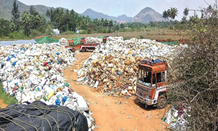
- Dumping: Dumping involves the depositing and filling of low-lying lands with refuse as a method of land reclamation. It is a simple method applicable to all types of refuse. Bacterial action during dumping reduces the volume of refuse, allowing the reclaimed land to be utilized for cultivation later. However, dumping areas should be situated at a considerable distance, around 50-100 meters, from human habitation due to the difficulties and environmental pollution associated with this method. In 1967, the WHO expert committee declared dumping as the most unsanitary method, emphasizing the discontinuation of this procedure.
Advantages:
- Cost-effective, simple, and easy to implement.
- Suitable for disposing of a majority of the refuse.
- Dumping land can be repurposed for cultivation or vegetable growing.
Disadvantages:
- Exposure of refuse to flies and rodents.
- Source of nuisance due to unpleasant smell and unsightly appearance.
- Loose refuse can be scattered anywhere by the wind.
- Drainage from the dumping area contributes to air, water, and land pollution.
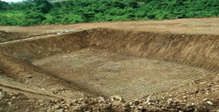
2. Controlled tipping or sanitary landfill: Controlled tipping also known as sanitary landfill, is a method of refuse disposal involving the systematic land filling of waste. This approach is employed in areas where suitable land is available for waste management. Unlike dumping, controlled tipping involves covering each layer of refuse with a layer of soil. A trench, typically 6-10 feet deep and 12-34 feet wide, is dug based on the volume of refuse and local conditions. The refuse is then deposited in the trench, followed by a layer of earth, creating a sanitary landfill. This method prevents the breeding of flies, minimizes foul odors, and is conducted in a systematic manner. After a specific period, the trench is filled, and a new trench is excavated. The chosen site for landfilling should be at a safe distance from residential areas, and precaution should be taken to avoid proximity to water sources and wells. Eventually, the filled site can be repurposed for town or agricultural use. Noteworthy examples include the Gokarna landfill site and the Okharpauwa landfill site, both utilized for waste disposal in the Kathmandu metropolitan city. Three operational methods, namely the trench method, the ramp method, and the area method, are employed in this process.
- The trench method: In this method, level ground is typically selected, and a long trench is excavated, ranging from 6 to 36 feet in width, depending on local conditions. The compacted refuse is then placed in the trench, reaching a depth of 2 meters (6 feet). It is estimated that one area of land per year will be required for every 1,000 inhabitants.
- The ramp method: This technique is well-suited for areas with moderately sloping ground. Some evaluation is conducted to secure the covering material.
- The area method: This method is employed for filling land depressions, converting pits, and clay pits. The refuse is deposited, packed, and consolidated in uniform layers up to 2-2.5 meters (6-8 feet) deep. Each layer is sealed on its exposed surface with a mud cover at least 30 centimeters (12 inches) thick. Such sealing prevents infestation by flies and rodents and suppresses the nuisances of smell and dust. However, this method often has the disadvantage of requiring supplemental earth from outside sources.
Advantages:
- Prevents the breeding of flies and rodents, as well as the generation of foul odors from decomposing waste.
- The filled land can be repurposed for various community needs.
- Cost-effective method capable of handling large quantities of waste.
- Minimal odour associated with the landfilling process.
Disadvantages:
- Requires a substantial amount of land for trenches or pits.
- Slow decomposition of waste materials.
- Completed landfills may settle over time, necessitating ongoing maintenance.
- Demands careful planning, design, and operational management for effective waste disposal.
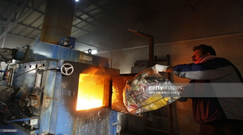
- Incineration/Burning: Incineration is considered the most hygienic method of refuse disposal. It becomes the method of choice when suitable land is not available for dumping and controlled tipping. Incineration is particularly well-suited for the disposal of dangerous refuse, especially hospital waste.
The process of incineration is implemented in several large industrialized areas where the availability of suitable land is limited. This method involves the preliminary sorting of dust or ash and the removal of any harmful refuse. In Nepal, incineration is commonly employed for the disposal of hospital waste in larger hospitals.
The incinerator consists of the following parts:
- Furnace or combustion chamber: This component is lined with firebrick and cement, serving as the space where refuse is burnt.
- Feeding holes: Equipped with a platform arrangement through which refuse is fed into the incinerator.
- Cells below: These are compartments into which refuse falls during the incineration process.
- Stokers: These mechanisms are responsible for moving the refuse forward toward the fire within the incinerator.
- Baffle plate: This component directs all fumes through the hottest part of the incinerator’s combustion chamber.
The chimney of the incinerator should be sufficiently tall to allow enough air for proper combustion; otherwise, the incinerator may emit foul smoke.
Advantages
- Minimizes the cost of refuse disposal.
- Requires minimum land for operation.
- The burnt product (clinkers) can be utilized in the production of cement, road construction, etc.
- Can be operated in any weather conditions.
- Effectively minimizes the risk of infection, especially crucial for the disposal of highly harmful hospital refuse.
Disadvantages
- Building and operating incinerators can be expensive.
- If placed in an open area, it may not function optimally during the rainy season due to moisture.
- High energy consumption during construction.
- Requires skilled personnel for operation and demands continuous maintenance.
- Produces excessive smoke during the incineration process.
- The community is deprived of the opportunity to create manure from the disposed waste.
4. Composting: Composting is a method that involves the combined disposal of refuse, night soil (excreta), or sludge. Through natural processes, the organic matter in the refuse undergoes bacterial action, resulting in the formation of a material known as “compost.” This compost possesses significant manurial value for the soil. The primary by-products of composting are carbon dioxide (CO2), water, and heat. The heat generated during composting reaches temperatures of 60⁰C or higher over a period of several days, effectively destroying eggs and larvae of flies and other pathogenic agents. This method is particularly suitable for small towns and rural areas.
Currently, two main methods of composting are utilized:
A. Anaerobic method (Bangalore method)
B. Aerobic method (Mechanical composting)
A. Anaerobic or Bangalore Method: The anaerobic method of composting, commonly known as the Bangalore method or hot fermentation process, was developed through continuous research conducted by the Indian Council of Agricultural Research at the Indian Institute of Science, Bangalore. This method proves to be a safe and satisfactory approach for the disposal of refuse and night soil in towns.
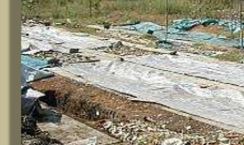
Trenches are excavated to a depth of 90 cm (3 feet), with a width of 1.5-2.5 m (5-8 feet) and a length ranging from 4.5 to 10 m (15-30 feet), depending on the volume of refuse and night soil to be disposed of. The pit should be situated approximately 800 m (½ mile) away from the city.
The Composting Procedure:
- The process begins with the spreading of a first layer of refuse, approximately 15 cm (6 inches) thick, at the bottom of the trench.
- Night soil is added over this layer to a thickness of 5 cm (2 inches).
- Subsequent layers of refuse and night soil are added in alternating proportions of 15 cm (6 inches) and 5 cm, respectively.
- When fully filled, the heap rises to 30 cm above the ground level. The top layer should consist of refuse with a thickness of at least 25 cm (9 inches).
- The entire heap is then covered with soil. If properly constructed, a person’s leg will not sink when walking over the compost mass.
- Due to bacterial action, heat is generated in the compost mass within 7 days. This heat persists for 2 to 3 weeks, effectively decomposing the refuse and night soil while destroying all pathogenic and parasitic organisms.
- Complete decomposition is achieved at 4 to 6 months, resulting in well-decomposed, odorless, innocuous material with high manurial value, ready for application to the land.
Advantages:
- The process is neither a nuisance to the public nor harmful to health.
- It generates valuable manure, beneficial for agricultural purposes.
- Economically beneficial, especially when the produced manure is sold.
- Enhances soil structure, texture, and aeration. Increases the soil’s water-holding capacity.
- Loosens clay soil and aids sandy soils in retaining water.
Disadvantages:
- Special precautions and care are necessary, given the utilization of night soil in the composting process.
B. Aerobic/Mechanical Composting
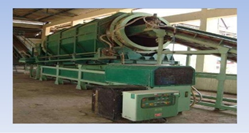
The waste material undergoes an initial sorting process to retrieve salvageable items such as rags, bones, metals, and glass, which might interfere with the grinding operation. Subsequently, the waste is pulverized using specialized equipment to reduce particle size to less than 2 inches. The pulverized waste is then combined with sewage, sludge, or night soil in a rotating apparatus and subjected to controlled conditions, including a specific carbon-nitrogen ratio, temperature, moisture level, pH, and aeration.
The entire composting process takes approximately 4 to 6 weeks to complete. This method is employed in developed countries such as Holland, Germany, and Israel. In Nepal, specific municipalities, such as Bhaktapur municipality, have adopted this technique in past years with assistance from Germany.
5. Vermicomposting: Vermicompost is the result of composting that utilizes various species of worms, typically earthworms, white worms, and red wigglers. This process involves creating a heterogeneous mixture by decomposing vegetable or food waste, along with bedding materials, ultimately leading to the production of vermicast. Vermicast, also known as worm castings, worm humus, or worm manure, is the final product resulting from the breakdown of organic matter by earthworms. Studies have indicated that these castings contain lower levels of contaminants and a higher concentration of nutrients compared to the organic materials before undergoing vermicomposting. Rich in water-soluble nutrients, vermicompost serves as an excellent organic fertilizer and soil conditioner. The entire process of producing vermicompost is referred to as vermicomposting.

Types of vermicomposting
- Large scale
Large-scale vermicomposting is implemented in various countries, including Canada, Italy, Japan, India, Malaysia, the Philippines, and the United States. The resulting vermicompost can be utilized in farming, landscaping, compost tea production, or sold commercially. Some large-scale operations also breed worms for bait or home vermicomposting.
Two primary methods are employed in large-scale vermiculture. The first involves using a windrow, which serves as a large bin containing bedding materials for earthworms. Organic material is added to the windrow, and although it lacks physical barriers, the abundance of organic matter typically prevents worms from escaping. Windrows are often placed on a concrete surface to deter predators.
The second method for large-scale vermicomposting is the raised bed or flow-through system. In this approach, worms are fed “worm chow” on top of the bed, and castings are harvested from below using a breaker bar across a large mesh screen forming the bed’s base.
These large-scale vermicomposting systems rely on consistent sources of substantial quantities of food, such as dairy cow or pig manure, sewage sludge, brewery waste, cotton mill waste, agricultural waste, food processing and grocery waste, cafeteria waste, grass clippings, and wood chips.
b. Small scale:
For home vermicomposting, a variety of commercially available bins or adapted containers made of materials like old plastic containers, wood, or metal can be used. Bins require aeration through holes or mesh, and some may include a spout or holes in the bottom for liquid drainage into a collection tray.
Common materials for small-scale vermicomposting bins are recycled polyethylene and polypropylene plastic or wood. Plastic bins are non-absorbent, requiring more drainage, while wooden bins may decay over time and need replacement.
Small-scale vermicomposting is ideal for converting kitchen waste into high-quality soil amendments when space is limited. This method eliminates the need for manual turning, as worms decompose organic matter efficiently.
Redworms, the most commonly used worms in composting systems, thrive at temperatures of 15–25 °C (59-77 °F) and can survive at 10 °C (50 °F). High temperatures above 30 °C (86 °F) may be detrimental to them.
In these systems, kitchen and garden waste are commonly used, including fruits and vegetables (excluding citrus and other “high acid” foods), vegetable and fruit peels, coffee grounds and filters, tea bags, grains, eggshells, leaves, grass clippings, newspapers, and paper toweling (free from cleaners or chemicals).
Advantages:
Soil:
- Enhances soil aeration.
- Enriches soil with micro-organisms, including enzymes such as phosphatase and cellulase.
- Microbial activity in worm castings is 10 to 20 times higher than in the soil and organic matter that the worm ingests.
- Attracts deep-burrowing earthworms already present in the soil.
- Improves water holding capacity.
Plant Growth:
- Enhances germination, plant growth, and crop yield.
- Improves root growth and structure.
- Enriches soil with micro-organisms, adding plant hormones such as auxins and gibberellic acid.
Economic:
- Bio-waste conversion reduces waste flow to landfills.
- Elimination of bio-wastes from the waste stream reduces contamination of other recyclables collected in a single bin (a common problem in communities practicing single-stream recycling).
- Creates low-skill jobs at the local level.
- Low capital investment and relatively simple technologies make vermicomposting practical for less-developed agricultural regions.
Environmental:
- Helps close the “metabolic gap” through recycling waste on-site.
- Large systems often use temperature control and mechanized harvesting, while other equipment is relatively simple and does not wear out quickly.
- Production reduces greenhouse gas emissions such as methane and nitric oxide (produced in landfills or incinerators when not composted or through methane harvest).
Disadvantages:
- Smells: A well-maintained, closed bin is odorless; when opened, it should have a minimal earthy smell. Oxygen can be provided by air holes in the bin, occasional stirring of bin contents, and removal of some contents if they become too deep or too wet. Anaerobic decomposition from excess wet feedstock can result in an ammonia smell.
- Moisture: Moisture must be maintained above 50%; lower moisture content will not support worm respiration and can increase worm mortality.
- Pest species: Pests such as rodents and flies are attracted by certain materials and odors, usually from large amounts of kitchen waste, particularly meat.
- Worms escaping: While worms generally stay in the bin, they may attempt to leave when first introduced or after a rainstorm when outside humidity is high.
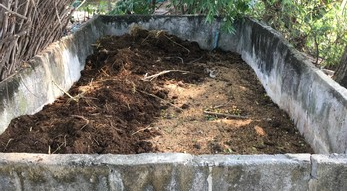
6. Manure pits: In Nepal, the periphery of town areas and rural regions lacks a proper system for refuse collection and disposal. Consequently, waste is haphazardly thrown around houses, leading to water, air, and soil pollution. The issue of refuse disposal in these areas can be addressed by having individual households dig “manure pits.” In these pits, garbage, cattle and cow dung, straw, and leaves are dumped, and each day’s accumulation is covered with earth. With two such pits in rotation, when one is filled, the other comes into use. After 5-6 months, the refuse undergoes a transformation into manure, which can then be utilized in the soil. This method of refuse disposal proves to be effective and relatively simple in rural communities.
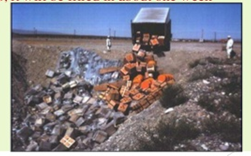
7. Burial: Burial is a suitable waste disposal method for small camps. It involves digging a trench that is 1.5 meters wide and 2 meters deep. At the end of each day, the refuse is covered with 20-30 cm of earth. Once the trench level reaches 40 cm above the ground, it is covered with earth, compacted, and a new trench is dug out. After 4-6 months, the contents can be utilized as manure.
Advantages:
- Prevents fly breeding and rodent infestation.
- Prevents the development of bad odors.
Disadvantages:
- Requires a larger land area for digging pits.
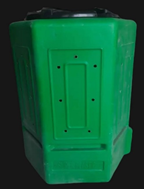
8. Compost bin: This bin is shaped like a drum so it is called drum-compost bin. This bin is made up of thick plastic. It is 19 inches wide and 24 inches long and 24 inches long. Top part is covered with a cover. In the inside part the bin is divided by a circle rod frame into upper big part and lower small part. Upper part is used to make compost and lower part is used to collect compost. There are many small holes in the upper part. It is for the passage of air inside. It takes 2-3 months to make compost. There are many small holes in the upper part. It is for the passage of air inside. It takes 2-3 months to make compost. Garden soil can be added to the compost. A layer of soil will help to mask any odor and microorganisms in the soil will accelerate the composting process.
Advantages:
- It can be placed anywhere, either inside or outside the home.
- It is simple, affordable, and easy to use.
- Provides better air circulation compared to other bins.
- Facilitates easy addition of new material and removal of finished compost.
- No issues with foul odors.
- Availability of nutrient-rich compost.
- Minimizes the problem of flies.
- Composting can divert up to 30% of household waste away from the garbage container.
Disadvantages:
- In areas where rodents or other unwanted creatures are prevalent, keeping them out of the bin can be challenging.
To download: Click here

You May Also Like

Health education methods
Ice-Berg of disease
