Female Community Health Volunteer (FCHV) Programme in Nepal
Introduction
The Female Community Health Volunteer (FCHV) Programme is an important part of Nepal’s community-based health care system. It was established in 1988 AD (2045/46 B.S.) with the main aim of improving access to and utilization of basic health services, particularly among women and children.
The Female Community Health Volunteer (FCHV) Programme was initiated by the Government of Nepal in 1988/89 (2045/46 B.S.) in 27 districts. Initially, the programme followed a ward-based approach, in which one FCHV was selected from each ward regardless of the population size. Later, in 2050 B.S. (1993/94), a population-based approach was introduced in 28 districts to ensure better representation according to population size.
Source: Medic, 2021 – SMS Tools Empowering FCHVs in Nepal
The programme was gradually expanded from the initial 27 districts to cover all 75 districts of Nepal. Following the restructuring of Nepal into 77 districts, the programme now cover all 77 districts across the country. Today, FCHVs play an important role in delivering community-based health services, promoting healthy practices and improving maternal and child health.
FCHVs are local women selected by members of their respective Mothers’ Groups for Health with support from local health facility staff. They provide basic health information and services in their communities and act as a link between health facilities and community members. They help promote healthy practices, prevent common diseases, identify health problems and encourage people to use available health services.
Objectives of the FCHV Programme
The major objectives of the FCHV Programme are:
- To mobilize motivated female volunteers to connect health programmes with local communities.
- To improve women’s knowledge and skills to identify and manage common health problems.
- To increase community participation in health promotion and disease prevention.
- To develop FCHVs as health educators, motivators and community health promoters.
- To increase awareness and demand for available health services among community people.
- To improve maternal, newborn and child health.
- To promote family planning and reproductive health services.
- To encourage healthy behaviours and practices at the household and community levels.
- To support the prevention and control of communicable and non-communicable diseases.
Uniform and identification of FCHVs
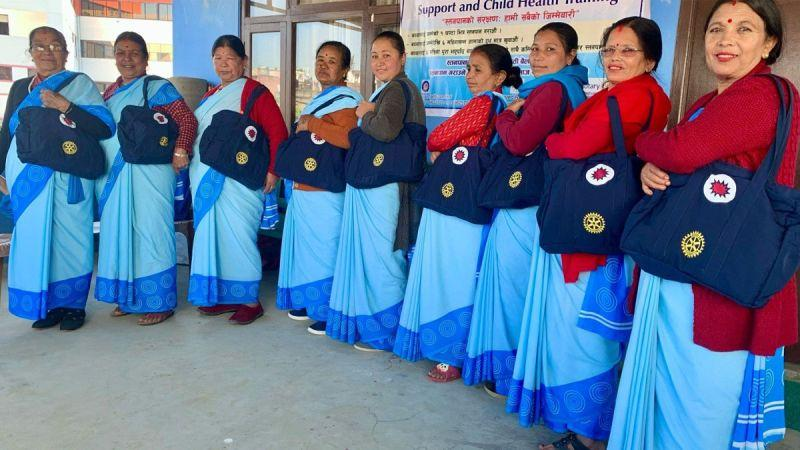
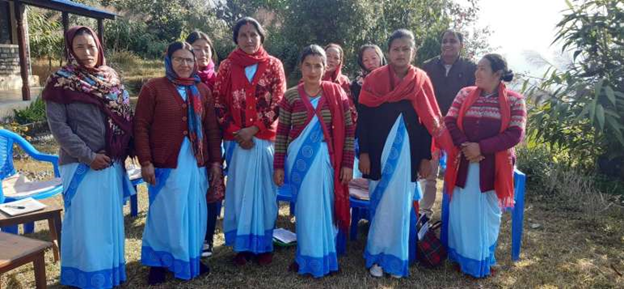
- Saree (uniform): The Government of Nepal introduced a standardized FCHV uniform in 2010. It consists of a sky-blue saree with the FCHV identification logo on its border. The uniform helps identify FCHVs in their communities.
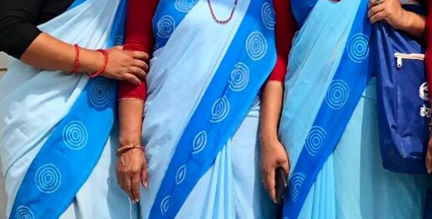
- FCHV logo: The programme has a special identification logo consisting of four concentric circles. It represents the gradual expansion of FCHV activities from the individual community or ward level to the Village Development Committee (VDC), district and national levels.

- Identity card: FCHVs are provided with identity cards to establish their official identification while performing community health activities.
- FCHV signboard: A designated signboard helps identify FCHVs and their service locations in the community.
- FCHV bag: They are provided with a programme-related bag to carry health education materials and essential supplies.
Selection and training of FCHVs
FCHVs are selected by the Mothers’ Groups for Health through community consensus, with support from local health facilities. The National FCHV Programme Strategy (2067 B.S.) emphasizes selecting motivated women who are permanent residents of the respective community and committed to serving local people.
Newly selected FCHVs receive basic training to develop the knowledge and skills required for community health activities. The Department of Health Services annual reports describe an 18-day basic training programme conducted in two phases (9 + 9 days). Refresher training and orientation are also provided when required.
Equipment and materials provided to FCHVs
Following basic training, FCHVs are provided with programme related materials to support their community activities, including:
These include:
- Medicine kit boxes.
- FCHV manuals and guidelines.
- Flipcharts.
- Ward registers and reporting forms.
- Information, Education and Communication (IEC) materials.
- FCHV bags.
- Signboards.
- Identity cards.
- They also receive essential health supplies through nearby health facilities, such as:
- Family planning commodities, including oral contraceptive pills and condoms.
- Iron and folic acid tablets.
- Vitamin A capsules.
- Oral Rehydration Solution (ORS).
- Other essential supplies according to assigned responsibilities and national programmes.
The availability of specific medicines and supplies depends on national guidelines and local health facility arrangement.
Roles and responsibilities of FCHVs
Female Community Health Volunteers (FCHVs) play an important role in providing basic health information, promoting healthy behaviours and linking households with health facilities. Their major roles and responsibilities include the following:
A. Maternal and newborn health
- Educate pregnant women about antenatal care, nutrition, personal hygiene and institutional delivery.
- Encourage regular antenatal check-up and delivery by skilled birth attendants.
- Inform mothers about danger signs during pregnancy, childbirth and the postpartum period.
- Conduct postnatal home visits to mothers and newborns according to national guidelines.
- Promote early initiation of breastfeeding within one hour of birth and exclusive breastfeeding for six months.
- Educate mothers about newborn care, warmth, hygiene and umbilical cord care.
- Encourage mothers to attend recommended postnatal check-ups.
- Provide counselling on maternal nutrition, postpartum health and Family Planning.
B. Family Planning and Reproductive Health
- Distribute condoms and oral contraceptive pills according to programme guidelines.
- Provide information and counselling about available family planning methods.
- Promote birth spacing and responsible parenthood.
- Refer couples to health facilities for long-acting and permanent contraceptive methods.
- Create awareness about reproductive health and prevention of sexually transmitted infections.
C. Child health and nutrition
- Educate mothers about breastfeeding and appropriate complementary feeding.
- Promote exclusive breastfeeding for the first six months.
- Encourage completion of routine childhood immunization.
- Identify children with signs of malnutrition.
- Measure mid-upper arm circumference (MUAC) in children aged 6–59 months to identify acute malnutrition.
- Refer malnourished children to health facilities for further assessment and management.
- Distribute vitamin A capsules to eligible children during national supplementation campaigns.
- Distribute oral rehydration salts (ORS) and educate mothers about their preparation and use.
- Promote personal hygiene, safe drinking water and sanitation.
D. Health education and health promotion
- Conduct regular mothers’ group meetings and community health education activities.
- Provide information on nutrition, hygiene, sanitation and disease prevention.
- Promote handwashing with soap and the use of safe drinking water.
- Encourage balanced diets and regular physical activity.
- Create awareness about the harmful effects of tobacco, alcohol and substance abuse.
- Motivate community members to use available health services.
E. Prevention and control of communicable diseases
- Educate communities about the prevention of communicable diseases such as diarrhoea, tuberculosis, malaria and respiratory infections.
- Promote personal hygiene and environmental sanitation.
- Identify and inform health workers about suspected cases of communicable diseases.
- Encourage early health-seeking behaviour and timely referral.
- Support community-based disease prevention and control programmes.
F. Prevention and control of non-communicable diseases
- Create awareness about hypertension, diabetes, cancer and other non-communicable diseases.
- Promote healthy lifestyles, balanced diets and regular physical activity.
- Educate people about the importance of regular health check-ups.
- Encourage individuals with suspected health problems to visit health facilities.
- Support community awareness activities related to non-communicable disease prevention.
G. Referral and follow-up services
- Identify individuals with health problems requiring medical attention.
- Refer pregnant women, newborns and children with danger signs to appropriate health facilities.
- Encourage timely treatment and follow-up.
- Communicate important health problems identified in the community to health workers.
H. Community participation and mobilization
- Mobilize mothers’ groups and community members in health-related activities.
- Encourage participation in immunization, nutrition and sanitation programmes.
- Coordinate with health facilities, local governments and community organizations.
- Support national health campaigns and special health programmes.
- Encourage families to take responsibility for improving their own health
Facilities and incentives provided to FCHVs
The Government of Nepal provides different facilities and incentives to recognize and support the contributions of FCHVs.
- Dress allowance: NPR 10,000 is provided to each FCHV annually as a dress allowance.
- Transportation allowance: NPR 12,000 is provided annually to support transportation costs.
- Retirement appreciation: Since fiscal year 2071/72, the government has allocated NPR 20,000 to appreciate FCHVs who complete 60 years of age and leave voluntary service, as recommended by their respective mothers’ groups.
- Health insurance: The Government of Nepal bears 50% of the health insurance premium for individual FCHVs.
- Health services: FCHVs are included among the target groups for receiving services through the Social Service Units of health facilities.
- Recognition: World Volunteer Day, celebrated on 5 December every year, is also observed as Female Community Health Volunteer Day in Nepal.
- Additional support: Provincial and local governments may provide additional financial support and facilities to FCHVs according to their policies and available budgets.
Note: The amount and availability of allowances and facilities may change according to government policies and guidelines.
Achievements and contributions of the FCHV Programme
The FCHV Programme has made significant contributions to Nepal’s health sector.
- Increased awareness of maternal, newborn and child health.
- Improved access to basic health information and services, particularly in rural and remote communities.
- Increased community participation in immunization and nutrition programmes.
- Promoted family planning and reproductive health awareness.
- Supported vitamin A supplementation and ORS distribution programmes.
- Contributed to the prevention and management of childhood malnutrition.
- Supported efforts to reduce maternal, infant and child mortality.
- Strengthened community-based primary health care services.
- Contributed to achieving Millennium Development Goals (MDGs), particularly Goals 4 and 5.
- Continues to support Nepal’s commitment to achieving Sustainable Development Goals (SDGs).
Challenges of the FCHV Programme
Despite its important contributions, the FCHV programme faces several challenges:
- Inadequate financial incentives compared with workload and responsibilities.
- Limited availability of medicines and essential supplies in some areas.
- Insufficient refresher training and supportive supervision.
- Difficulties in reaching remote and geographically isolated communities.
- Increasing workload and additional programme responsibilities.
- Limited transportation facilities.
- Inadequate recognition and appreciation in some communities.
- Difficulties in maintaining records and reporting.
- Need for continuous motivation and support from health facilities and local governments
References
- Department of Health Services. (2014). Annual report 2070/71. Ministry of Health and Population, Government of Nepal.
- Department of Health Services. (2024). Annual report 2080/81. Ministry of Health and Population, Government of Nepal.
- Government of Nepal, Ministry of Health and Population, Department of Health Services, Family Health Division. (2010). National female community health volunteer program strategy (Unofficial translation).
- Government of Nepal, Ministry of Health and Population, Department of Health Services. (2019). National female community health volunteer program strategy, 2067 (First revision 2076).
- Female community health volunteers in community-based health programs of Nepal: Future perspective. (2017). Frontiers in Public Health, 5, Article 181. https://doi.org/10.3389/fpubh.2017.00181
You May Also Like
Scrub Typhus: Symptoms, Causes, Diagnosis, Treatment and Prevention

Excreta disposal