Dragon Fruit (Hylocereus spp.): Nutritional Value, Health Benefits, and Potential Side Effects
Introduction
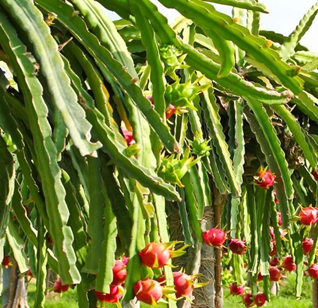
Dragon fruit is a tropical fruit known for its bright-colored skin, juicy flesh, and tiny black seeds. It is also known as Pitaya or Pitahaya. The fruit originates from Central and South America but is currently extensively cultivated in numerous tropical and subtropical nations, including Vietnam, Thailand, Malaysia, Indonesia, Taiwan, Mexico, India and Nepal. The fruit comes from several species of cactus and is now grown in many tropical and subtropical parts of the world.
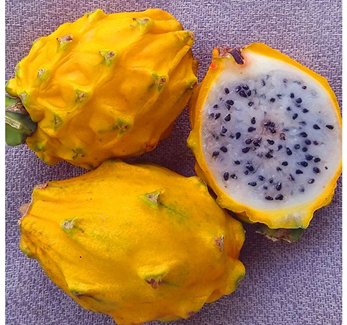
Depending on the variety, dragon fruit may have pink, red, or yellow skin with white, red, or deep purple flesh. The small black seeds are edible and are usually eaten along with the fruit. In recent years, dragon fruit has become popular because of its refreshing taste, attractive appearance, and nutritional value. It contains water, carbohydrates, dietary fiber, minerals, vitamin C, and natural plant compounds such as betalains and phenolic compounds.
Types of dragon fruit
Several types of dragon fruit are available. The main differences are the color of the skin and flesh.
1. White-fleshed dragon fruit
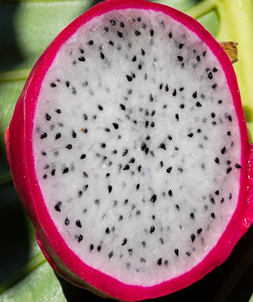
White-fleshed dragon fruit is commonly associated with Hylocereus undatus. It generally has pink or red skin with white flesh and small black seeds.
2. Red-fleshed dragon fruit
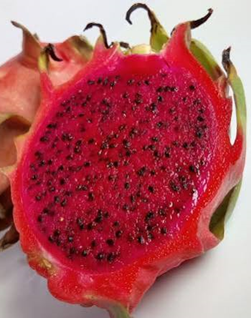
Red-fleshed dragon fruit, commonly associated with Hylocereus polyrhizus, has red or pink skin and red flesh. Its intense color comes largely from betalain pigments.
3. Yellow dragon fruit
Yellow dragon fruit is commonly associated with Selenicereus megalanthus. It has yellow skin and white flesh. Less research has been done on yellow pitahaya than on red and white dragon fruit.
Nutritional value per 100 g Fresh Weight different species of dragon fruits
| Nutritional Compositions | White-fleshed | Red/pink-fleshed | Yellow-skinned, white-fleshed |
| Total phenolic content | 28.65 mg GAE | 24.22 mg GAE | 22.90 mg GAE |
| Carbohydrates | 6.26 g | 5.97 g | 13.07 g |
| Dietary fiber | 0.83 g | 1.01 g | 1.27 g |
| Total sugar | 6.06 g | 5.60 g | 5.93 g |
| Protein | 0.94 g | 0.89 g | 0.40 g |
| Fat | 0.57 g | 0.57 g | 0.10 g |
| Iron | 0.87 mg | 0.78 mg | 21.07 mg |
| Zinc | 0.34 mg | 0.29 mg | 4.35 mg |
| Sodium | 4.50 mg | 14.30 mg | 1.43 mg |
| Niacin | 0.43 mg | 2.80 mg | 0.20 mg |
| Potassium | 193.0 mg | 158.29 mg | 98.41 mg |
| Phosphorus | 29.9 mg | 29.2 mg | 18.0 mg |
| Calcium | 45.7 mg | 31.2 mg | 11.7 mg |
| Magnesium | 45.9 mg | 33.2 mg | 16.1 mg |
| Glucose | 1.58 g | 1.33 g | 0.99 g |
| Fructose | 2.15 g | 2.0 g | 3.25 g |
| Sucrose | 2.12 mg | 2.54 mg | 1.69 g |
| Sorbitol | 2.61 mg | 4.52 mg | NA |
| Vitamin C | 5.64 mg | 3.40 mg | 11.34 mg |
| Vitamin D2 | 0.69 μg | 0.58 μg | NA |
| Vitamin E | 100.0 μg | 140.0 μg | NA |
| Vitamin K1 | 30.05 μg | 9.40 μg | NA |
Health benefits of dragon fruit
1. Provides useful nutrients
Dragon fruit is a nutritious fruit that contains water, carbohydrates, dietary fiber, minerals, vitamin C, and other natural plant compounds. Eating fruits such as dragon fruit can help improve the variety of nutrients in the diet.
2. Provides antioxidants
Dragon fruit contains betalains, phenolic compounds, and flavonoids that have antioxidant properties. These compounds may help protect the body from oxidative stress. However, most evidence comes from laboratory studies, so more human research is needed.
3. Support digestive health
Dragon fruit contains dietary fiber, which helps support normal bowel function. Including dragon fruit in the diet can contribute to daily fiber intake. However, it should not be considered a guaranteed treatment for constipation.
4. Help with blood glucose control
Dragon fruit has been studied for its possible effects on blood glucose. Research has shown some benefits in people with prediabetes, but the results in people with type 2 diabetes are not clear. Therefore, dragon fruit may have some effect on blood glucose, but it should not be considered a treatment for diabetes.
5. May support heart health
Some studies have investigated the effects of dragon fruit on blood vessels and heart health. One small study found improvements in some measures of vascular function after consuming betalain-rich dragon fruit. However, more studies with larger numbers of people are needed before firm conclusions can be made.
6. May have anti-inflammatory properties
Dragon fruit contains betalains and phenolic compounds that have shown antioxidant and anti-inflammatory effects in laboratory and animal studies. More research in humans is needed to confirm these effects.
7. Can be part of a healthy diet
Dragon fruit contains fiber, potassium, and other plant compounds. It can be included as part of a healthy and balanced diet. However, eating dragon fruit alone cannot prevent heart disease or other diseases.
8. Provides vitamin C
Dragon fruit contains vitamin C, although the amount can vary between varieties. Vitamin C is important for normal immune function, collagen formation, and protection against oxidative stress.
How to eat dragon fruit?
Dragon fruit can be eaten in different ways:
- Cut the fruit in half and eat the flesh with a spoon.
- Peel the skin and cut the fruit into pieces.
- Add it to fruit salads.
- Mix it with yogurt.
- Add it to oatmeal or breakfast bowls.
- Blend it into a smoothie.
- Use it in homemade desserts.
Eating the whole fruit instead of strained juice provides more dietary fiber.
Frequently Asked Questions
Is dragon fruit healthy?
Yes. Dragon fruit provides dietary fiber, minerals, vitamin C, and other natural plant compounds. It can be included as part of a balanced diet.
Which dragon fruit is healthiest?
There is no single variety that is best for everyone. Red and purple-fleshed varieties are generally rich in betalain pigments, while white and yellow varieties also provide useful nutrients.
Is dragon fruit good for diabetes?
People with diabetes can eat dragon fruit as part of a healthy diet. However, dragon fruit cannot be used to treat or cure diabetes.
Can I eat dragon fruit every day?
For most healthy people, dragon fruit can be eaten regularly as part of a varied and balanced diet. There is no established medicinal dose for daily consumption.
Can dragon fruit help with constipation?
Dragon fruit provides dietary fiber, which supports normal bowel function. It may contribute to a healthy diet, but it should not be considered a guaranteed treatment for constipation.
Can dragon fruit seeds be eaten?
Yes. The small black seeds are edible and are normally eaten together with the flesh.
Is red dragon fruit better than white dragon fruit?
Red-fleshed dragon fruit generally contains more betalain pigments, but this does not necessarily mean that it is healthier than white-fleshed dragon fruit in every way.
Does dragon fruit contain vitamin C?
Yes. Dragon fruit contains vitamin C, although the amount varies among different varieties.
Can dragon fruit prevent cancer?
Dragon fruit contains compounds with antioxidant and other biological activities that are being studied. However, there is not enough human evidence to say that eating dragon fruit can prevent cancer.
References
- Shah, K., Chen, J., Chen, J., & Qin, Y. (2023). Pitaya nutrition, biology, and biotechnology: A review. International Journal of Molecular Sciences, 24(18), 13986. https://doi.org/10.3390/ijms241813986
- Chen, S.-Y., Xu, C.-Y., Mazhar, M. S., & Naiker, M. (2024). Nutritional value and therapeutic benefits of dragon fruit: A comprehensive review with implications for establishing Australian industry standards. Molecules, 29(23), 5676. https://doi.org/10.3390/molecules29235676
- Poolsup, N., Suksomboon, N., & Paw, N. J. (2017). Effect of dragon fruit on glycemic control in prediabetes and type 2 diabetes: A systematic review and meta-analysis. PLOS ONE, 12(9), e0184577. https://doi.org/10.1371/journal.pone.0184577
- Cheok, A., Xu, Y., Zhang, Z., Caton, P. W., & Rodriguez-Mateos, A. (2022). Betalain-rich dragon fruit (pitaya) consumption improves vascular function in men and women: A double-blind, randomized controlled crossover trial. The American Journal of Clinical Nutrition, 115(5), 1418–1431. https://doi.org/10.1093/ajcn/nqab410
- Cheok, A., George, T. W., Rodriguez-Mateos, A., & Caton, P. W. (2020). The effects of betalain-rich cacti (dragon fruit and cactus pear) on endothelial and vascular function: A systematic review of animal and human studies. Food & Function, 11(8), 6807–6817. https://doi.org/10.1039/D0FO00537A
- Coelho, V. S., de Moura, D. G., Aguiar, L. L., Ribeiro, L. V., Silva, V. D. M., Correia, V. T. V., Melo, A. C., Silva, M. R., Ferreira de Paula, A. C. C. F., de Araújo, R. L. B., & Melo, J. O. F. (2024). The profile of phenolic compounds identified in pitaya fruits, health effects, and food applications: An integrative review. Plants, 13(21), 3020. https://doi.org/10.3390/plants13213020